Top 10 Football Statistics Every Fan Should Know
Why Football Stats Matter More Than Ever
Football statistics have moved from the backroom to the broadcast booth. What once lived in analysts' spreadsheets now appears on screen during live matches, shapes transfer decisions worth hundreds of millions, and drives millions of fantasy football choices every week.
The shift happened fast. A decade ago, goals and assists were about as deep as most match coverage went. Today, pundits on major broadcasts casually reference expected goals, pressing metrics, and pass networks. Fans who understand these numbers get more out of every match — they can see why a team is struggling before the scoreline reflects it, or spot a player doing vital work that never makes the highlights.
None of these stats require a data science degree. Think of them as a second language for the game you already love. Once you pick up the basics, matches open up in ways the scoreline alone never could.
Goals and Expected Goals (xG) Explained
Expected Goals (xG) is a metric that measures the quality of a shot, not just whether it went in. Each attempt is assigned a value between 0 and 1 based on factors like distance, angle, and whether it came from open play or a set piece — a value of 0.9 means a chance that similar shots convert 90% of the time.
Raw goals tell you what happened. xG tells you what should have happened. A striker who scores two goals from 0.4 xG had a clinical night. A team that generated 3.2 xG and lost 1-0 probably played better than the result suggests.
This is why xG has become the most discussed modern stat in football. It cuts through luck. Over a season, a player's actual goals tend to drift toward their xG total — which makes it genuinely useful for judging whether a hot streak is sustainable or a cold run is just variance.
For casual viewers, the simplest takeaway: if a team consistently underperforms their xG, either their finishers are poor or their luck is about to turn.
Possession, Passes, and Pass Completion Rate
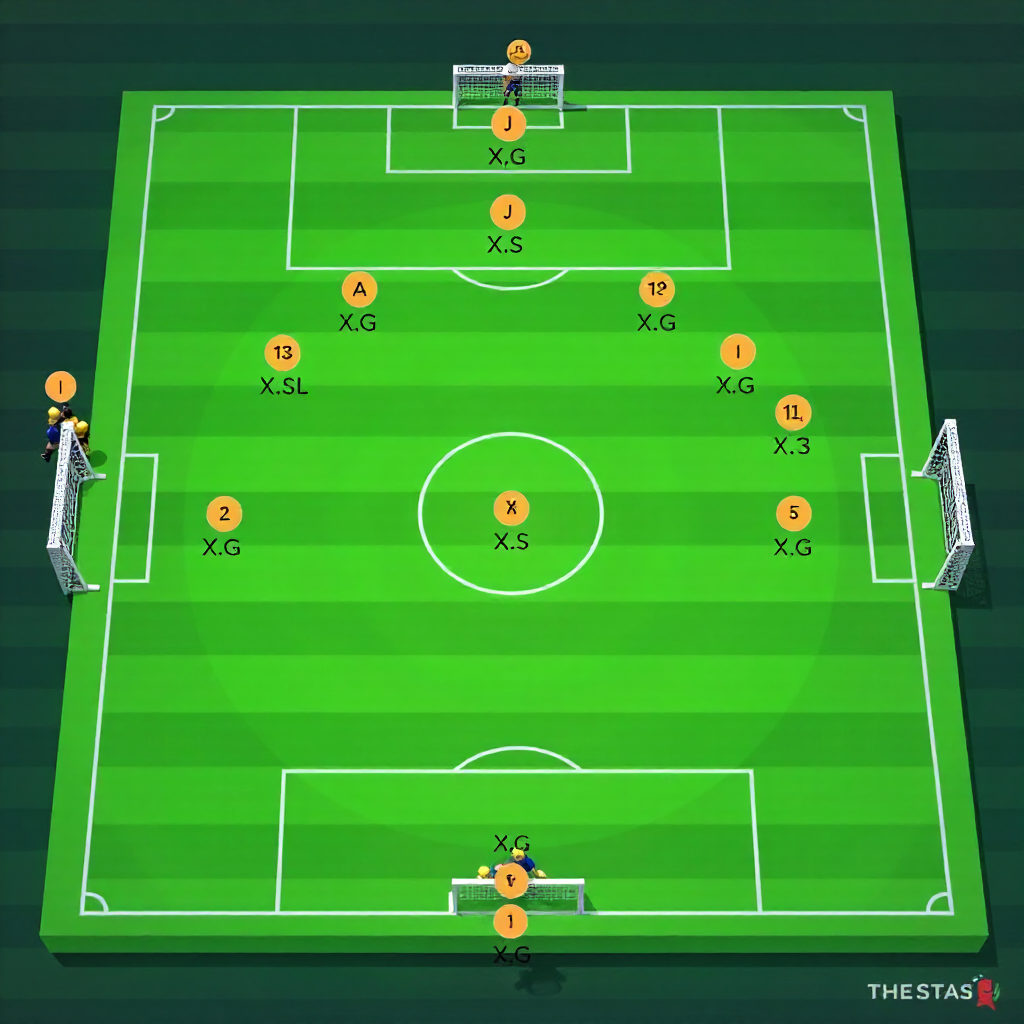
Possession percentage measures how much of the ball a team controls during a match, while pass completion rate tracks what share of their attempted passes actually reach a teammate. A team can dominate possession at 65% while playing sideways passes in their own half — or control just 40% while creating chance after chance on the break.
That context is everything. High possession with a 93% pass accuracy sounds impressive, but if most of those passes are safe, backward, and risk-free, the number flatters. Conversely, a team completing 78% of passes while attempting ambitious through balls and switches of play is doing something much harder.
The stat becomes genuinely interesting when you compare it to progressive passes — passes that move the ball meaningfully toward the opponent's goal. That combination, pass completion plus forward intent, separates teams that control games from those that just circulate possession.
Defensive Stats: Clean Sheets, Tackles, and Interceptions
Defensive performance is the hardest area to evaluate with simple numbers, but three stats give you a solid starting point. A clean sheet means a goalkeeper or defense kept a shutout — zero goals conceded — and it remains the clearest single-match marker of defensive solidity.
Tackles won percentage goes deeper. It measures not just how many tackles a player attempts, but how many they actually win. A defender who attempts 8 tackles per game but wins only half is creating as many problems as he solves. Someone winning 80% of fewer attempts is far more reliable.
Interceptions add another layer — they show positional intelligence, the ability to read the game and cut out passes before a tackle is even needed. The best defensive midfielders and center-backs rack up interceptions precisely because they're rarely caught out of position.
Used together, clean sheets, tackle success rate, and interceptions give a much fuller picture of a defensive unit than goals conceded alone.
Pressing and Physical Metrics: PPDA and Distance Covered
PPDA stands for Passes Allowed Per Defensive Action — a lower number means a team presses more aggressively, forcing turnovers higher up the pitch. It's the best single number for measuring pressing intensity and tactical style.
A team with a PPDA of 6 is hunting the ball relentlessly. A team at 14 is sitting deep and letting opponents play out. This explains a lot about why some managers demand incredible fitness from their squads — high-press systems are physically brutal to execute over 90 minutes.
Which brings in distance covered. Top-level outfield players typically cover 10–13 kilometers per match, with pressing-heavy sides often pushing the upper end of that range. Tracking this stat across a season reveals fatigue patterns, injury risk, and whether a team's energy drops in the second half — something that shows up in late-goal conceded statistics.
Attacking Creativity: Assists, Key Passes, and Chances Created
Assists and key passes measure a player's creative contribution, but they capture different things. An assist only counts when the pass directly leads to a goal. A key pass counts every time a pass creates a genuine shooting opportunity — regardless of whether the shot goes in.
This distinction matters enormously when evaluating playmakers. A creative midfielder might generate 5–6 key passes per game but end a month with zero assists because his teammates are missing chances. The assists column makes him look quiet; the key passes column tells a very different story.
Chances created is the broader total — it captures all passes that led to attempts, including key passes and assists combined. When you're trying to identify a team's true creative engine, this is often the most honest number available.
Players who consistently rank in the top tier for chances created are almost always central to their team's attack, even when goals and assists don't fully reflect it on a given week.
How to Use These Stats in Fantasy Football and Match Watching
These stats become immediately practical in two contexts: picking your fantasy football squad and getting more out of matches you watch live. For fantasy, the most useful combination is goals per 90 minutes, xG, and key passes — together they separate consistent performers from players riding a hot streak.
Before picking a striker, check whether their goals track their xG over the last six to eight gameweeks. If they're massively outscoring their xG, a correction is likely coming. If they're underperforming it, they may be due a run of form. For midfielders, chances created and key passes per 90 minutes predict assist potential far better than recent assist totals alone.
During live matches, a few stats shift how you read what's happening on the pitch. Watch for PPDA-style pressing battles in the first 20 minutes — the team that wins those duels often controls the game's tempo. If a team is generating high xG but not scoring, stay patient: the goals are likely coming. And if a side's pass completion rate drops sharply in the second half, they're probably running out of legs.
Stats don't replace watching the game. They amplify it — giving you the vocabulary to explain what you're already sensing as a fan.
Frequently Asked Questions
What does xG mean in football?
xG, or Expected Goals, is a measure of shot quality. It assigns each attempt a probability score based on factors like distance, angle, and shot type — telling you how likely that chance was to result in a goal, regardless of the actual outcome.
Which football stats are most important for defenders?
The three most useful defensive stats are clean sheets (overall shutouts), tackles won percentage (duel success rate), and interceptions (positional reading of the game). Together they give a much fuller picture than goals conceded alone.
How are football statistics collected and tracked?
Most professional leagues use optical tracking systems and human coders to log every touch, pass, tackle, and movement during a match. Companies like Opta and StatsBomb provide this data to clubs, broadcasters, and platforms. You can find many of these stats publicly on sites like FBref or via your league's official statistics page.
What stats should I check before picking fantasy football players?
Focus on goals per 90 minutes, xG over recent weeks, key passes, and chances created. These metrics give you a forward-looking view of performance rather than relying purely on recent results, which can be skewed by luck.
Do higher possession stats always mean a better team?
No. Possession percentage only tells you who held the ball more — not what they did with it. Some teams deliberately play low-possession, high-efficiency counter-attacking football and win consistently. Always pair possession data with pass completion rate, progressive passes, and xG to get the full picture.