The Rise of Esports: How Competitive Gaming Became Mainstream
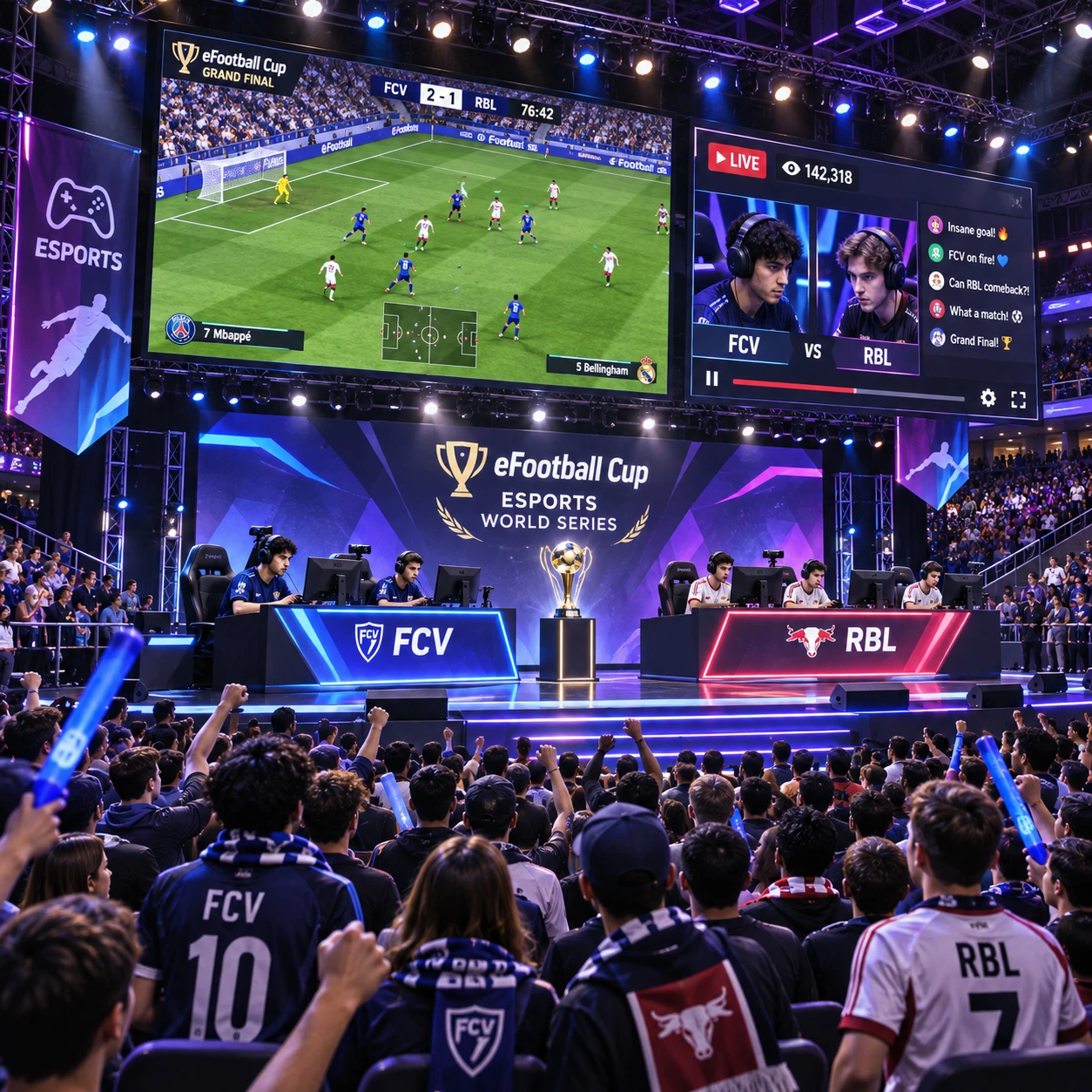
Competitive gaming grew from informal matches among friends into a global form of entertainment built around skilled play, organized tournaments, and passionate communities. Esports now spans many games and formats, from team-based strategy titles to football simulations. Its growth reflects a simple shift: people can play, watch, discuss, and follow competition through the same digital platforms.
For football fans, esports offers a familiar entry point. Football simulation games bring club identity, tactics, and match drama into a digital setting, while the wider esports scene shows how a game can support its own teams, players, events, and audience.
From hobby gaming to organized competition
Esports is organized competition in video games, where players or teams compete under agreed rules and tournament formats. Structured events helped turn casual gaming into a recognizable competitive activity that audiences could follow.
Early competitive gaming often meant informal challenges: friends comparing scores, local groups arranging matches, or players gathering at gaming events. As games added multiplayer modes and reliable ways to connect, competition became easier to arrange across distance. Organizers could set rules, brackets, match schedules, and prizes, giving players a clear path from a local contest to a larger event.
The games themselves helped shape the scene. Some reward quick decisions and individual precision; others depend on team coordination, long-term strategy, or knowledge of a sports simulation. There is no single esports format. A tournament may use a knockout bracket, a league table, a best-of series, or a combination of group play and playoffs. Each format changes how much consistency, adaptation, and preparation matter.
Rules make the competition legible. Players need a consistent game version, clear eligibility requirements, and procedures for pauses, disputes, and technical problems. Those details may seem administrative, but they help viewers trust what they are watching. Competitive gaming became more than a hobby when organizers could reliably stage matches and audiences could understand what was at stake.
What makes esports a spectator experience
Esports becomes a spectator experience through live events, live streaming, commentary, and the chance to watch exceptional decisions unfold in real time. The best broadcasts explain both the immediate action and the strategy behind it.
At a live event, spectators see players compete on stage, follow the match on large screens, and share the excitement with a crowd. Online broadcasts remove the need to travel. Viewers can watch from home, follow a favorite team during a season, or tune in for a major final. Streaming also makes it possible for smaller tournaments to reach a focused audience without building a traditional television production.
Commentary gives structure to fast or unfamiliar games. A play-by-play commentator describes what is happening, while an analyst may explain a team’s setup, a player’s timing, or why a particular decision matters. For football simulation games, that might mean unpacking a tactical change or a decisive run of play. For a different title, the vocabulary and strategic demands will be different.
Watching high-level play offers a mix of suspense and learning. A viewer may recognize a clever move, notice how a player responds under pressure, or simply enjoy a close match. The trade-off is that some games have steep learning curves: a new viewer may not understand every mechanic at first. Good broadcasts bridge that gap with clear visuals, concise explanations, and context about the tournament.
The growth of esports teams and professional players
Esports teams organize players for competition, while professional players build careers around practice, events, and public-facing work. Their roles can resemble parts of traditional sport, but the structure varies widely by game and organization.
A team may include starters, substitutes, a coach, an analyst, and staff who handle scheduling, travel, or media. In some games, the roster competes together in every match; in others, players compete individually under a team banner. Training can involve practice matches, reviewing recordings, studying opponents, and rehearsing specific strategies. The exact routine depends on the game, tournament calendar, and the player’s role.
Professional players also develop skills beyond game mechanics. They need communication, preparation, and the ability to adapt when an opponent changes plans. For a football simulation competitor, preparation might include learning the game’s current mechanics, testing formations, and practicing against different styles. Results still depend on performance in the match, and a strong reputation cannot guarantee a win.
An esports career is not one standard job. Some players earn income through team agreements, tournament results, streaming, or sponsorships, while others compete at a smaller scale alongside school or other work. Opportunities and stability differ by title and region. The visibility of a few stars can make the field look more secure than it is for the average competitor, so it is better to view esports as a varied industry than a guaranteed career path.
Why esports reached a wider audience
Esports reached a wider audience because online platforms let people watch, participate, and build communities around games without attending a venue. Accessibility and social connection have been as important as the tournaments themselves.
Streaming platforms let viewers find live matches, highlights, and creator-led discussions in one place. Chat and social media add a communal layer: fans react to key moments, debate tactics, and share clips. That interaction can make an online broadcast feel like a shared event, even when viewers are watching from different countries.
Game variety also broadens the audience. A person who does not follow a strategy game may enjoy a football simulation because its teams, formations, and match flow feel familiar. Another viewer may prefer a game built around individual skill or coordinated squads. This variety helps esports reach different interests, but it also means that a fan of one title may not automatically follow another.
Online access lowers some barriers, but it does not remove every one. Viewers need a suitable device and connection, and a tournament’s schedule may not fit every time zone. Games can also change through updates, which affects competitive balance and sometimes makes old highlights harder to compare with current play. The audience grows through many routes, not through one universal esports experience.
Where esports meets football
Football esports brings competitive gaming into conversation with football through football simulation games, organized tournaments, and digital versions of clubs and players. It gives football fans another way to engage with match tactics and club identity.
In a football simulation, competitors control teams on screen and make decisions about formations, passing, defending, and substitutions. Tournament rules determine the match length, game settings, eligible squads, and how a winner is decided. Some competitions feature individuals; others may involve club-affiliated players or teams. The specific structure depends on the game and event, so it is important not to assume every football esports tournament works the same way.
Football fans can bring useful context to these competitions. Familiarity with pressing, width, transitions, or defensive shape can make a match easier to follow. Still, a digital game has its own mechanics and constraints. A formation that works in real football may behave differently in a simulation, and player attributes or game updates can affect what is effective. Esports rewards knowledge of the game as played on screen, not only knowledge of the sport it represents.
That distinction creates a useful connection for a football stats and games audience. Fans can compare the logic of a real match with the choices made in a simulation, then watch how a competitor adapts under pressure. The appeal is partly recognition and partly contrast: the digital match resembles football, yet it has its own rules, rhythm, and competitive craft.
Esports and traditional sports: similarities and differences
Esports and traditional sports share organized competition, dedicated fans, skilled performers, and team identity, but they test different abilities and follow different conditions. Esports centers on interacting with a game system; traditional sports involve physical play on a field, court, or other venue.
Both can build rivalries and shared rituals. Fans follow results, support teams, discuss tactics, and remember defining performances. Competitors prepare, communicate, and make decisions under pressure. At the same time, the skills are not interchangeable. A footballer needs physical conditioning, spatial awareness, and execution on the pitch; an esports player must master the controls, systems, and decision-making demands of a specific game.
The competition environment differs, too. Traditional sports use physical equipment and venues, while esports depends on software, hardware, internet connections, and game rules set by publishers or organizers. A patch can alter competitive conditions; a hardware failure can interrupt play. These factors do not make esports less competitive, but they create distinct challenges for players, organizers, and viewers.
It is more accurate to compare esports and sport through shared questions than to treat them as identical: How are competitions organized? What makes a player effective? How does a team build loyalty? Those questions reveal similarities while leaving room for each activity’s own skills and formats.
Frequently asked questions about esports
What is esports?
Esports is organized competition in video games. It includes tournaments, leagues, and other events where individuals or teams compete under defined rules.
How did competitive gaming become popular?
Competitive gaming grew as multiplayer games, tournament organization, live streaming, and online communities made it easier to compete and watch. These elements connected players and audiences beyond local events.
How is esports different from traditional sports?
Both involve competition and fandom, but they demand different skills. Esports players compete through a specific video game’s controls and systems, while traditional athletes perform physical skills in a sport’s real-world setting.
How does football esports work?
Football esports competitions use football simulation games, with players competing in matches under event-specific rules. Formats, settings, and team structures vary by tournament and game.
Esports became mainstream through a combination of organized competition and easy ways to watch and participate. For football followers, football simulation games offer a clear point of connection, while the broader esports scene demonstrates how distinct games can support their own competitive communities.